What to see at Bom Jesus do Monte
The climb, in order
Start at the portico at the bottom rather than halfway up, because the whole thing is sequenced. The Via Sacra comes first, with chapels holding terracotta scenes of the Passion; eight primitive chapels were traced here in the 1700s and only the first two still stand. Then the Escadório dos Cinco Sentidos, the zigzag on every postcard of Braga, with a fountain at each turn for Sight, Smell, Hearing, Touch and Taste, water running from the eyes, the nose, the ears and the mouth of a stone face. Then the Escadório das Três Virtudes, added around 1781, with fountains for Faith, Hope and Charity.
Look up at the parapets as you go: armillary spheres run along the top, with pyramids at the angles. The counting question, 573 against 583, is settled as far as it can be on the stairway page.
The basilica
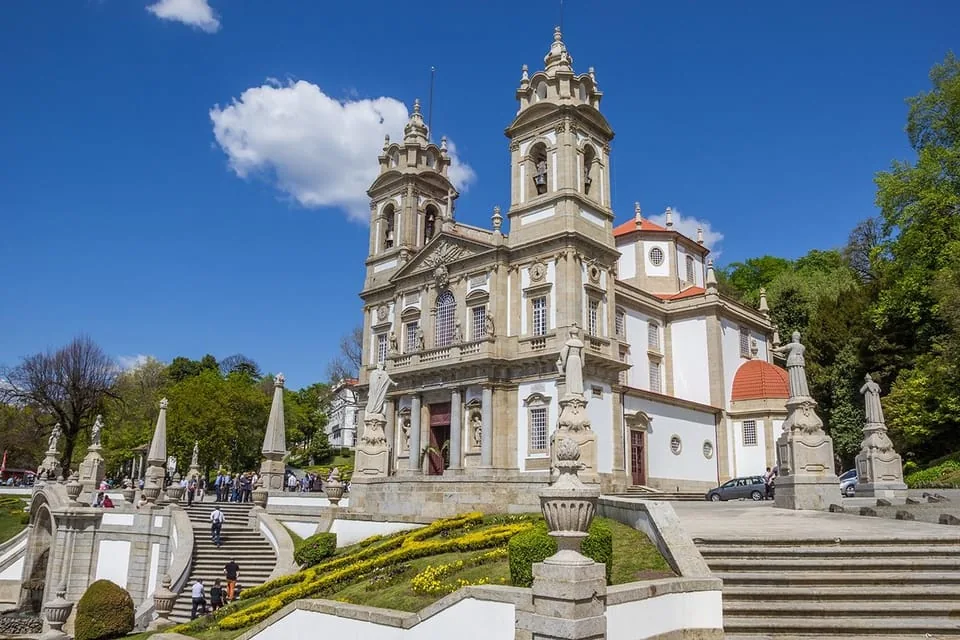
The church at the top is Neoclassical, by Carlos Amarante, built between 1784 and 1811 and consecrated in 1834. Both dates are correct and they describe different things: one is the construction, the other is the dedication after the interior was finished. It replaced an earlier Baroque church of about 1725 by Manuel Pinto Vilalobos, which is why the building at the summit looks calmer than everything you climbed to reach it. Entry is free. The bell tower charges a small amount and the figure I have is on the cost page.
Behind the church
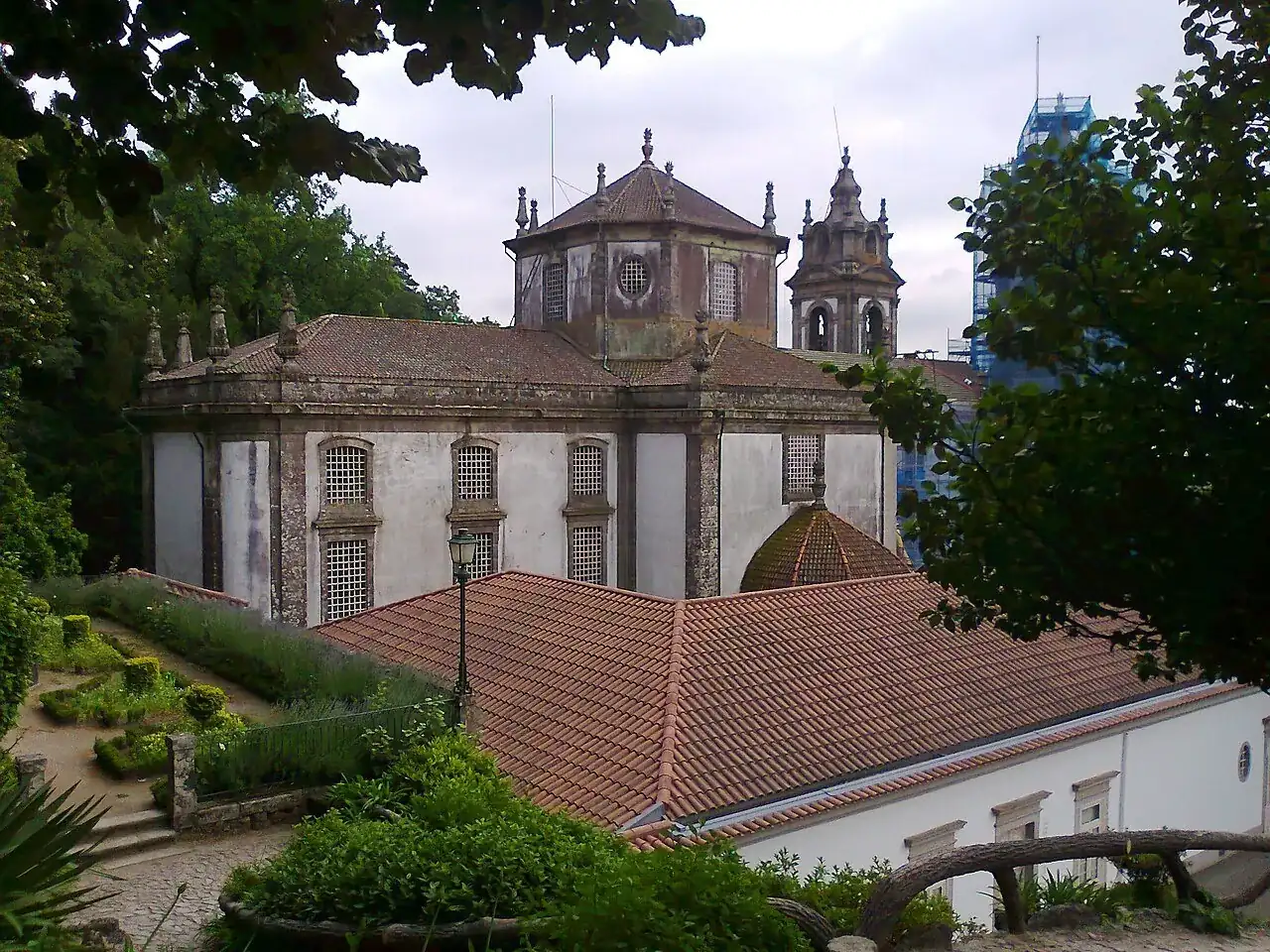
Most day trips turn round in the churchyard, which is a shame, because the wooded park behind the basilica is where people from Braga actually spend a Sunday. There is a lake with rowing boats for hire by the quarter hour, paths through the trees, and terraces looking back over the city. If you have come up for the evening, this is the part to leave time for.
The funicular
The 1882 water-counterbalanced funicular is a working exhibit in its own right, not just transport: two cars, a cable, and 5,850 litres of water doing the work of an engine. Stand at the top station for a minute and watch the tank fill. The full account, including who designed it and why the gradient is a percentage and not an angle, is on the funicular page.
Go up the stairway and down the funicular, or up the funicular and down the stairway if your knees prefer. Doing both in the same direction means seeing the fountains in reverse, which is the one arrangement that makes no sense.
How long to give it
As a guide to visit length, here is what the tours schedule: the sanctuary-only trail runs two hours on the ground, while the full-day trips from Porto that cover Braga and Guimarães give the hill considerably less. Some reviewers mention wishing they had more time there. There is more on when to come on the timing page, and the wider story of the place is in the complete guide.
 Sanctuary only
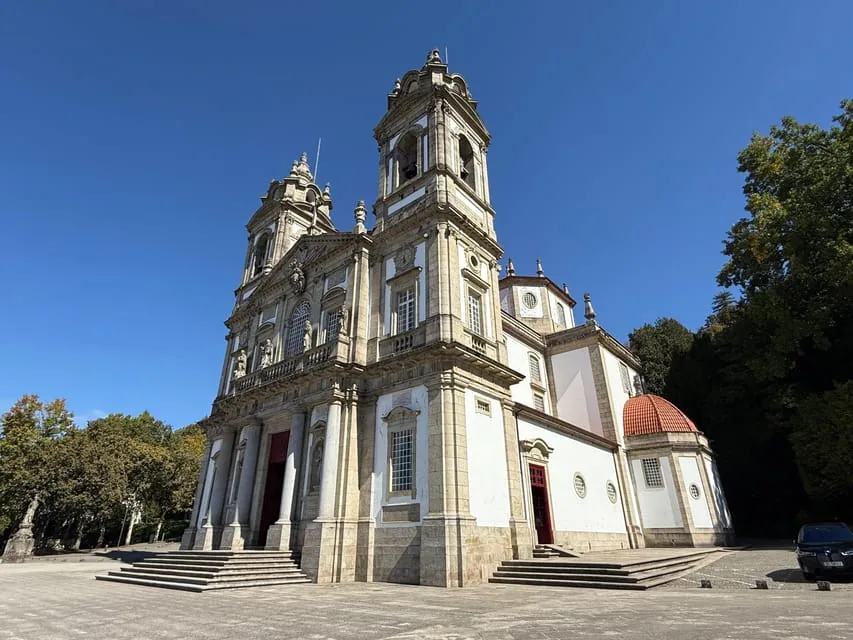
Historical Trail of Bom Jesus do Monte
 Funicular included
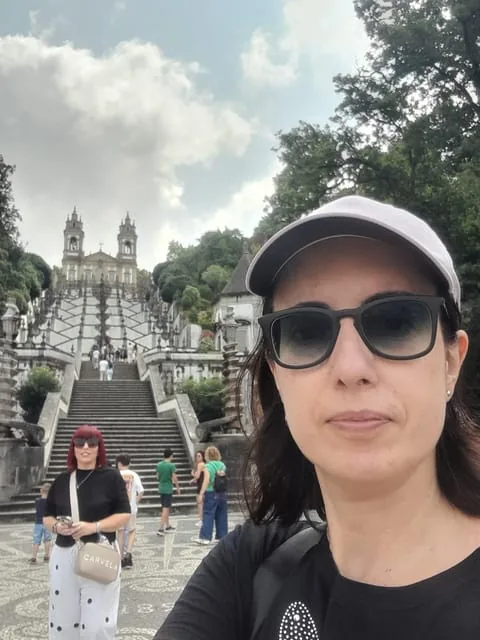
Braga Small-Group Walking Tour & Bom Jesus
 Deep dive
The Soul of Braga: Cathedrals, Palaces and Sanctuaries
Frequently asked questions
What is there to see at Bom Jesus do Monte?
The Baroque stairway with its Passion chapels and its fountains for the five senses and the three virtues, the Neoclassical basilica at the top, the 1882 funicular, and the park and lake behind the church. Entry to all of it is free.
What are the five senses fountains?
Five fountains set at the turns of the middle stairway, one each for Sight, Smell, Hearing, Touch and Taste, with the water emerging from the corresponding feature of a carved face. The three fountains above them stand for Faith, Hope and Charity.
Who built the church at Bom Jesus do Monte?
The present Neoclassical basilica is by Carlos Amarante, built between 1784 and 1811 and consecrated in 1834. It replaced a Baroque church of around 1725 attributed to Manuel Pinto Vilalobos. The longer story is on the history page.
Is there anything to do besides the stairway?
Behind the basilica there is a park with wooded paths, terraces over Braga and a lake where you can hire a rowing boat by the quarter hour. It is where local families spend Sunday, and most visitors on a tight day trip never see it.